Understanding the Simple Present Tense: The simple present tense is used to describe actions or states that are regular, habitual, or facts that are generally true. It is used to talk about daily routines, habits, and permanent situations.
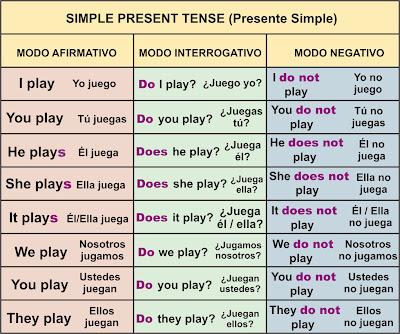
Formation of Simple Present Sentences: To form sentences in the simple present tense, use the base form of the verb (infinitive) without any changes for the subject, except for the third person singular.
For singular subjects (I, you, he, she, it), use the base form of the verb.
For plural subjects (we, you, they), also use the base form of the verb.
Examples of Simple Present Sentences: Let’s explore some examples to help illustrate the usage of the simple present tense:
«I play soccer every Saturday.»
«He studies math in the evenings.»
«They eat breakfast at 7 a.m.»
«We visit our grandparents during the summer.»
Expressing Habits and Routines: The simple present tense is commonly used to describe habits and routines. It helps convey actions that occur regularly or repeatedly.
«She reads a book before going to bed.»
«We brush our teeth twice a day.»
«They always take the bus to school.»
Stating General Facts or Truths: The simple present tense is also used to express general facts, universal truths, or scientific statements.
«Water boils at 100 degrees Celsius.»
«The sun rises in the east.»
«Elephants are the largest land animals.»
Talking about Scheduled Events: When discussing schedules or future events that are part of a fixed timetable, the simple present tense is used.
«The school bus arrives at 8 a.m.»
«The concert starts at 7 p.m.»
Adding Time Markers and Adverbs: To enhance the clarity of simple present tense sentences, it is common to use time markers or adverbs that indicate frequency or regularity.
«She always sings in the shower.»
«We often go hiking on weekends.»
«He rarely eats fast food.»
Negative Sentences in Simple Present: To form negative sentences in the simple present tense, use the auxiliary verb «do» or «does» + «not» (or the contraction «don’t» or «doesn’t») before the base form of the verb.
«I do not (don’t) like spicy food.»
«She does not (doesn’t) speak French.»
Yes/No Questions in Simple Present: To form yes/no questions in the simple present tense, invert the subject and the auxiliary verb «do» or «does.» Use the base form of the verb.
«Do you like ice cream?»
«Does he play the guitar?»
Practice and Application: To solidify your understanding of the simple present tense, practice forming sentences in different contexts. Engage in conversations, write paragraphs about your daily routines or hobbies, and read texts that use the simple present tense. The more you practice, the more natural it will become.
5 rules to conjugate the third person singular of simple present
Regular Verbs: For regular verbs, simply add «s» to the base form of the verb to form the third person singular. Example: I walk to school. (base form: walk) He walks to school. (third person singular) Verbs ending in «-s,» «-ss,» «-sh,» «-ch,» «-x,» and «-z»: For verbs that end in «-s,» «-ss,» «-sh,» «-ch,» «-x,» or «-z,» add «es» to the base form to conjugate the third person singular. Example: I miss my friends. (base form: miss) She misses her friends. (third person singular) Verbs ending in a consonant + «y»: For verbs that end in a consonant followed by «y,» change the «y» to «i» and add «es» to conjugate the third person singular. Example: I study English. (base form: study) He studies English. (third person singular) Verbs ending in a vowel + «y»: For verbs that end in a vowel followed by «y,» simply add «s» to the base form to form the third person singular. Example: I play the piano. (base form: play) She plays the piano. (third person singular) Irregular Verbs: Irregular verbs have unique conjugations in the third person singular and do not follow regular patterns. It’s important to learn the specific conjugation for each irregular verb. Example: I have a dog. (base form: have) She has a dog. (third person singular)
Deja una respuesta