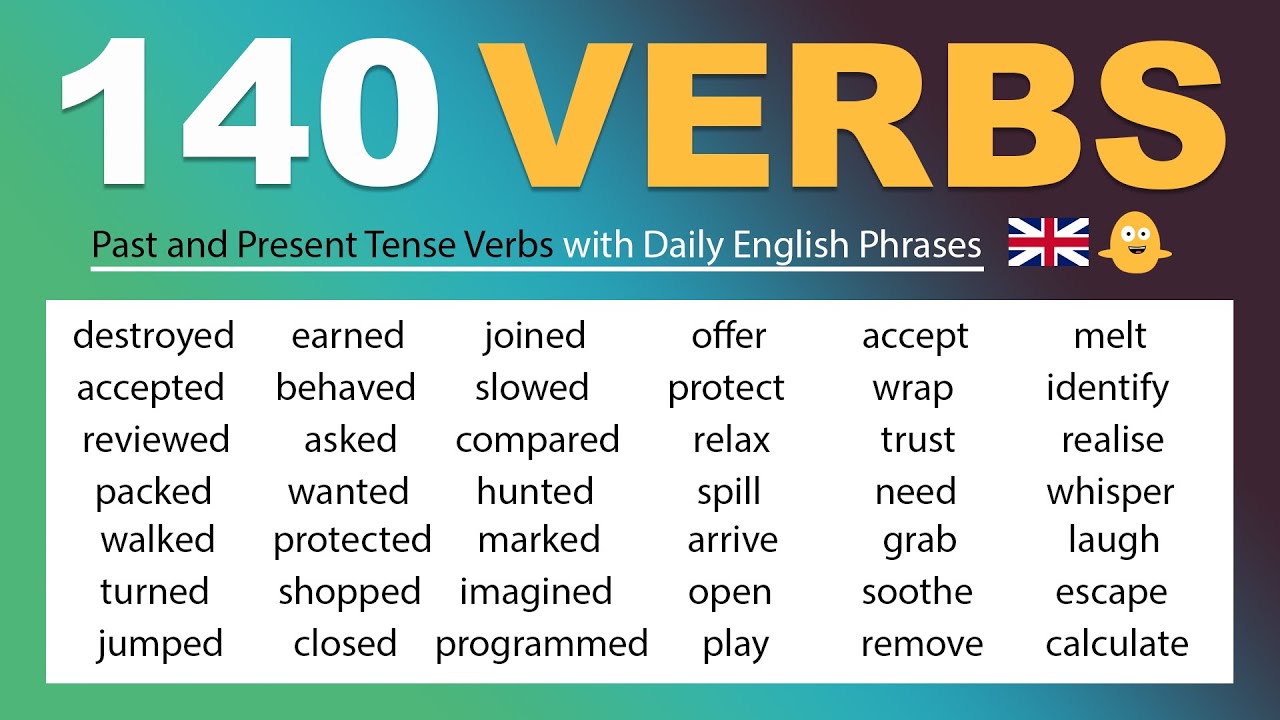
- What Are Verbs? Verbs are words that represent actions, occurrences, or states of being. They provide the necessary information about what is happening in a sentence. Every sentence requires a verb to make sense and convey meaning.
- Types of Verbs: a) Action Verbs: Action verbs express physical or mental actions that someone or something performs. Examples include «run,» «write,» «think,» and «laugh.» These verbs bring energy and movement to our sentences.
b) Linking Verbs: Linking verbs connect the subject of a sentence to a noun, pronoun, or adjective that describes or renames it. They express a state of being or a condition. Examples include «is,» «am,» «are,» «was,» and «were.» Linking verbs help us describe what or who someone or something is.
c) Helping Verbs: Helping verbs (also known as auxiliary verbs) work together with main verbs to express tense, voice, mood, or emphasis. Examples include «do,» «have,» «can,» «may,» and «will.» Helping verbs assist in forming different verb tenses and adding nuances to our sentences.
- Functions of Verbs: a) Expressing Actions: Verbs allow us to describe actions that people, animals, or things perform. They answer the question, «What is happening?» For example, «She dances gracefully» or «They swim in the ocean.»
b) Describing States of Being: Verbs help us express states of being, conditions, or qualities. They answer the question, «What is someone or something like?» For example, «He is intelligent» or «The flower smells lovely.»
c) Indicating Time: Verbs play a crucial role in indicating when an action occurs. They help us understand the timeline of events, whether in the past, present, or future. For example, «I will go to the party» or «She played soccer yesterday.»
- Verb Tenses: Verbs can be used in different tenses to indicate the time of an action or event. Some common verb tenses include present, past, and future. For example, «I eat breakfast every day» (present tense), «She walked to school yesterday» (past tense), and «They will study for the test tomorrow» (future tense).
- Subject-Verb Agreement: Verbs must agree with their subjects in number (singular or plural). Singular subjects take singular verbs, and plural subjects take plural verbs. For example, «He sings beautifully» (singular subject) and «They sing loudly» (plural subject).
- Verb Usage Tips: a) Be Specific: Using precise and descriptive verbs enhances your writing and communication. Instead of relying on generic verbs like «do» or «make,» opt for more vivid alternatives that convey a clearer image.
b) Active Voice: Using verbs in the active voice makes your writing more engaging and dynamic. The subject performs the action, bringing a sense of immediacy and clarity to your sentences. For example, «She painted a beautiful picture» (active voice) instead of «A beautiful picture was painted by her» (passive voice).
Deja una respuesta