- The Basics of Self-Introduction: Introducing yourself is an opportunity to share essential information about who you are. Start with a friendly greeting such as «Hello» or «Hi,» followed by your name. For example, «Hello, my name is [Your Name].» Keep it simple and straightforward.
- Adding Personal Details: While sharing your name is important, you can also provide additional information to help others get to know you better. Include details like your age, grade level, and any unique interests or hobbies you have. For instance, «I’m [Your Name], and I’m 14 years old. I’m a freshman here at [School Name]. In my free time, I enjoy playing basketball and painting.»
- Expressing Your Goals or Aspirations: Highlighting your goals or aspirations can provide insight into your ambitions and passions. Share a brief statement about what you hope to achieve or what you’re interested in pursuing academically or personally. For example, «I’m excited to explore science and mathematics, and I hope to join the robotics club to learn more about engineering.»
- Mentioning Your Background or Interests: If you have a unique background or a particular interest that sets you apart, feel free to mention it. This can spark conversations and help others find common ground with you. For instance, «I recently moved here from another city, and I’m eager to make new friends and discover the local community.»
- Keeping It Positive and Friendly: When introducing yourself, maintain a positive and friendly tone. Smile, make eye contact, and speak clearly so that others can understand you. Radiate confidence and approachability, which will make it easier for others to engage with you.
- Active Listening and Asking Questions: Introducing yourself is not only about sharing information but also about showing interest in others. Practice active listening by paying attention to what others say when they introduce themselves. Ask follow-up questions to demonstrate genuine curiosity and foster meaningful conversations. For example, if someone mentions their love for music, you could ask, «What instrument do you play?»
- Practice Makes Perfect: To feel more comfortable with self-introductions, practice them in different settings. Role-play with family members or friends, rehearsing what you would say and how you would present yourself. The more you practice, the more confident you will become.
- Adapting to Different Situations: Remember that self-introductions may vary depending on the context. Consider the setting, such as introducing yourself to classmates, teachers, or new acquaintances. Tailor your introduction to suit the situation, keeping it appropriate and respectful.
- Embracing Diversity and Inclusion: When introducing yourself, celebrate diversity and create an inclusive environment. Acknowledge and respect the diverse backgrounds, cultures, and perspectives of your peers. Be open-minded and embrace the opportunity to learn from others’ experiences.
- Confidence and Authenticity: Above all, be true to yourself. Embrace your unique qualities, strengths, and passions. Show confidence in who you are and what you have to offer. Authenticity leaves a lasting impression and helps you connect with others on a deeper level.
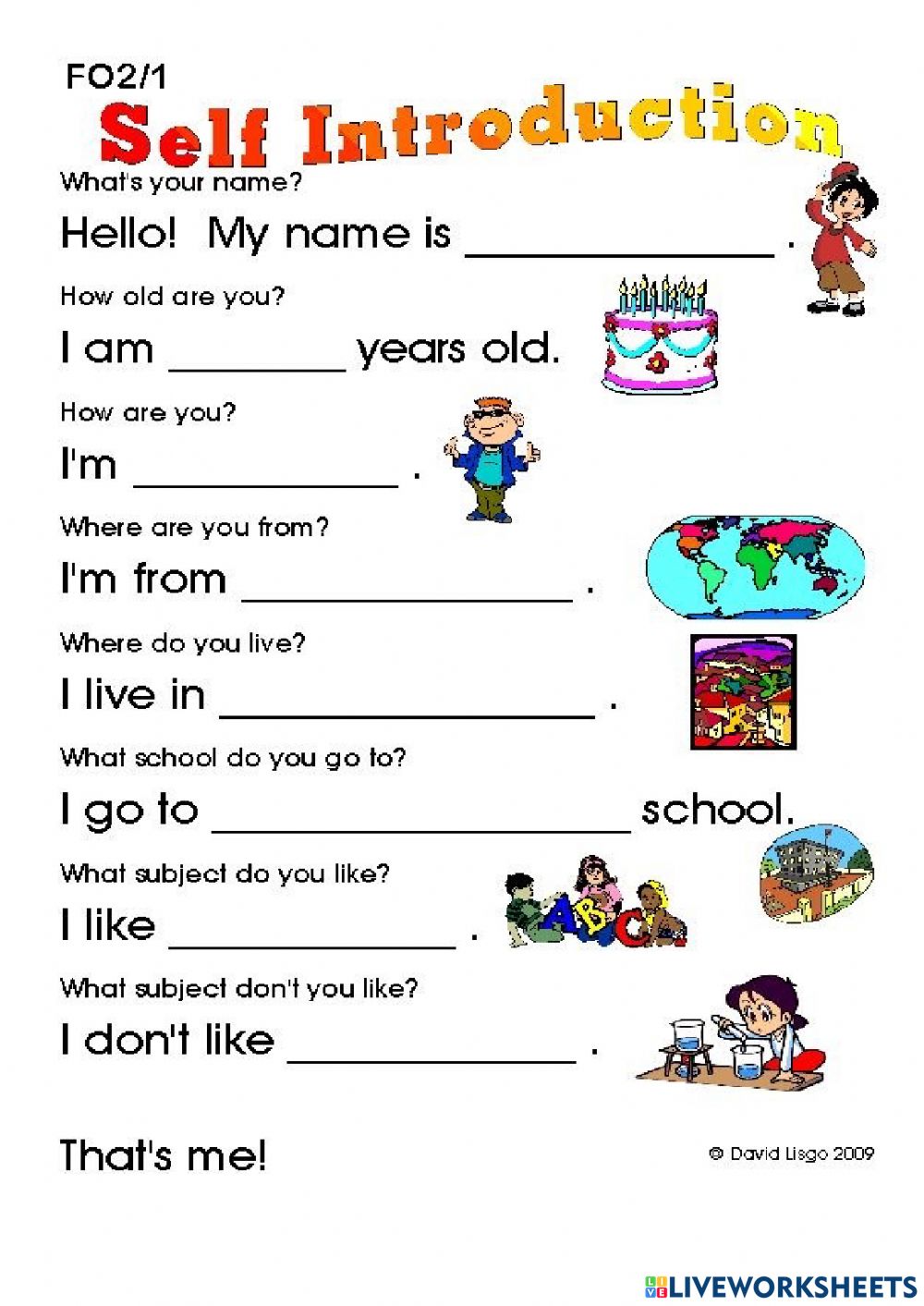
Introduce myself
por
Etiquetas:
Deja una respuesta